


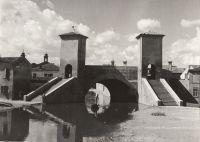


"Fiesole (Firenze) – Anfiteatro romano"
gelatin silver print
stamp verso
Photograph from a collection of tourism photographs from the first half of the 20th century, issued by Italian tourism boards. High-quality works by renowned studios, such as the Alinari brothers, were frequently used to promote Italy as a travel destination. With the West German Economic Miracle (Wirtschaftswunder) of the 1950s, these idealized images of longing became a reality: rising prosperity and increased leisure time transformed vacations into a status symbol. Italy – particularly the Riviera and the Adriatic coast – became the number one destination of choice. By the mid-1950s, 4.5 million Germans were already traveling across the Alps, marking the beginning of modern mass tourism.1
The Roman Theater in Fiesole is a significant testament to ancient architecture in Tuscany. Erected in the late 1st century BC and expanded under the emperors Claudius and Septimius Severus, the complex utilizes the natural slope of the terrain following the Greek model. The well-preserved semicircle of the seating tiers (cavea) once accommodated up to 3,000 spectators and is carved directly into the rock. Rising in the background of the archaeological site are the Museo Bandini, built in the early 20th century, and the distinctive, crenellated campanile of the 13th century Cathedral of San Romolo.
(Christoph Fuchs)
Note
1
"Geteiltes Deutschland: Modernisierung. Bundesrepublik im Wandel. Tourismus", Lebendiges Museum online, Deutsches Historisches Museum, https://www.hdg.de/lemo/kapitel/geteiltes-deutschland-modernisierung/bundesrepublik-im-wandel/tourismus.html (accessed 26.6.2026)

S-3104, Front view
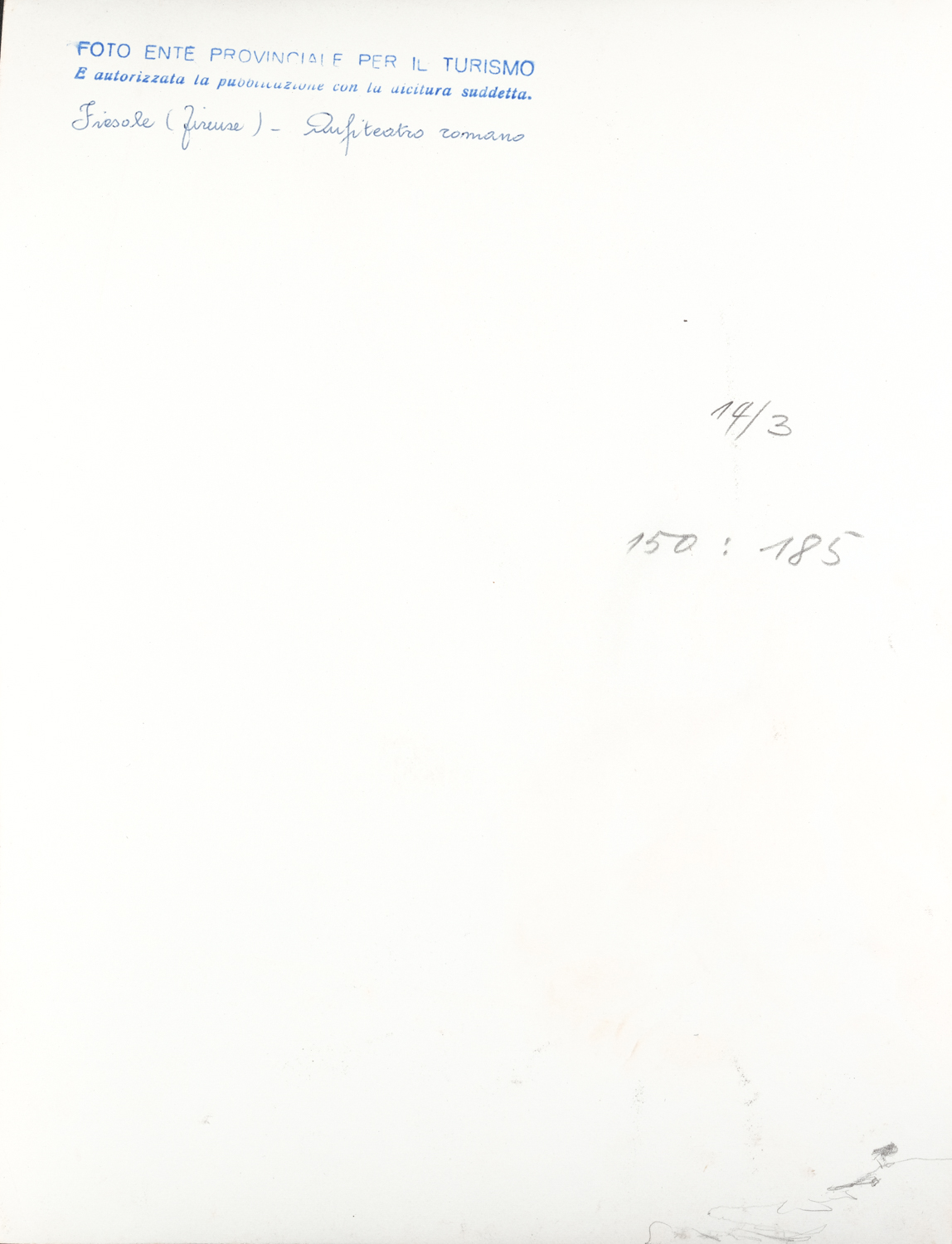
S-3104, view verso


![S-3111, Achille Villani & Figli, "Ravenna. [Sar]cofagi che [la] tradizione [at]tribuiva [a Galla Pla]cidia, mer[avi]glio[samen]te i[ll]uminati. La lune[tta mostra s]una gra[ticola e il] martir[e S. Lorenzo]", 1950s](/y/images/Hauptansichten/S_3111_full.jpg)

