


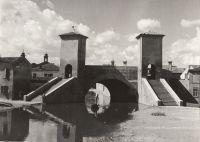


"VOLTERRA – Vicolo delle Prigioni. (XII. Seculo)."
(VOLTERRA – Vicolo delle Prigioni (street name) – 12th century)
archive nr. 34614
gelatin silver print
photographer, title, and year included
Photograph from a collection of tourism photographs from the first half of the 20th century, issued by Italian tourism boards. High-quality works by renowned studios, such as the Alinari brothers, were frequently used to promote Italy as a travel destination. With the West German Economic Miracle (Wirtschaftswunder) of the 1950s, these idealized images of longing became a reality: rising prosperity and increased leisure time transformed vacations into a status symbol. Italy – particularly the Riviera and the Adriatic coast – became the number one destination of choice. By the mid-1950s, 4.5 million Germans were already traveling across the Alps, marking the beginning of modern mass tourism.1
The Vicolo delle Prigioni in Volterra is a particularly atmospheric medieval alley ensemble in Tuscany. Laid out in the 12th century and flanked by massive quarry stone facades, the passageway is striking for its characteristic arches spanning the alley. These monumental arches originally served to structurally stabilize and statically support the closely spaced residential buildings against earthquakes. In its self-contained architectural structure, the picturesque ensemble embodies the dense, defensive cityscape of a high-medieval Tuscan commune.
The photograph comes from the famous Alinari studio, which was founded in Florence in 1852 by the brothers Leopoldo, Romualdo, and Giuseppe Alinari. The photographic studio is considered the oldest and most significant enterprise for photography and visual documentation worldwide. The institution achieved global renown through its systematic, masterfully crafted documentation of the cultural and architectural heritage of Tuscany. Created in the late 19th and early 20th centuries, their photographs are characterized by outstanding contrast sharpness and precise image composition. The images produced by the house of Alinari decisively shaped Italy's visual identity and served for decades as key motifs of longing for international cultural tourism.
(Christoph Fuchs)
Note
1
"Geteiltes Deutschland: Modernisierung. Bundesrepublik im Wandel. Tourismus", Lebendiges Museum online, Deutsches Historisches Museum, https://www.hdg.de/lemo/kapitel/geteiltes-deutschland-modernisierung/bundesrepublik-im-wandel/tourismus.html (accessed 26.6.2026)

S-3066, Front view
© Fondazione Alinari per la Fotografia
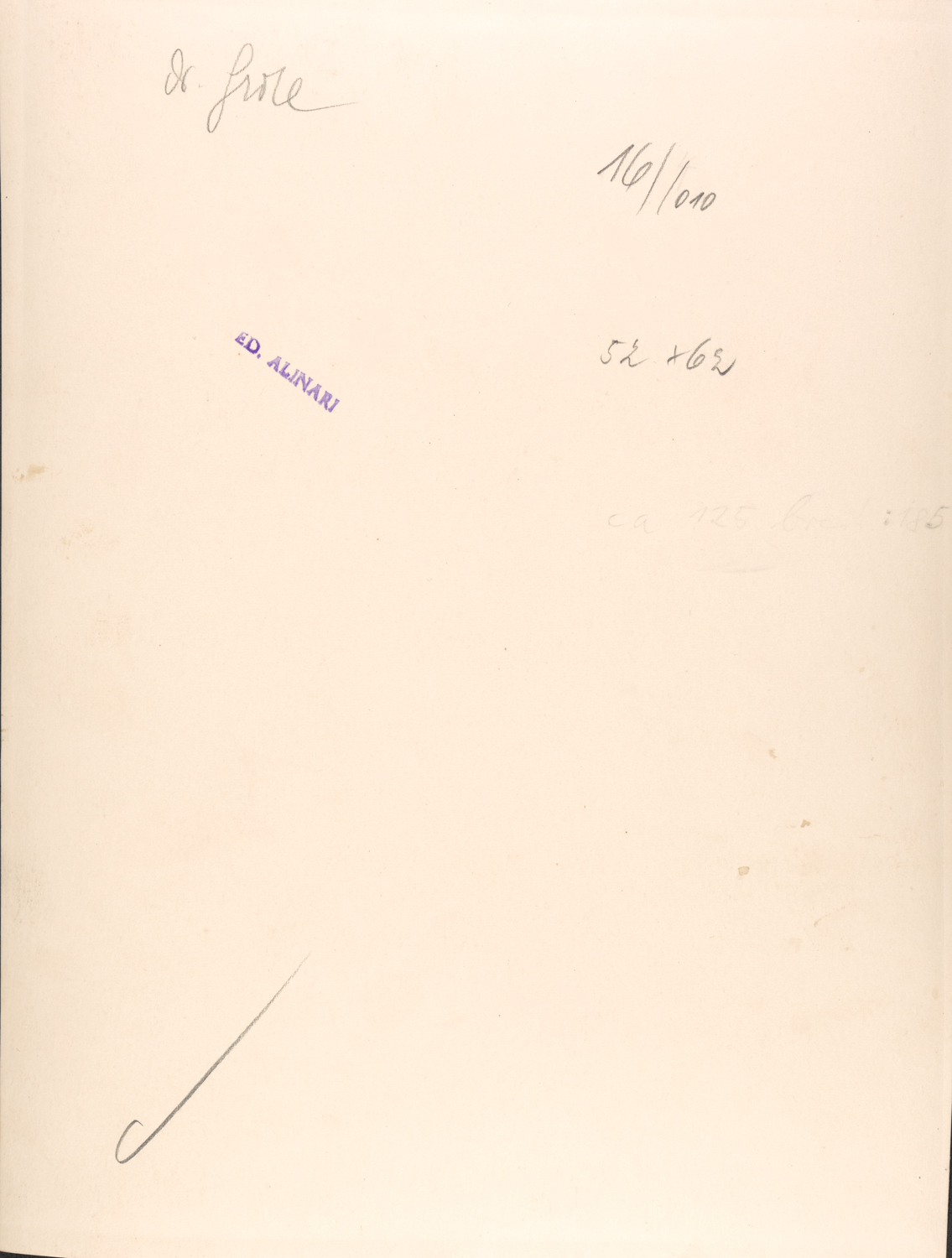
S-3066, view verso

© Fondazione Alinari per la Fotografia

© Fondazione Alinari per la Fotografia

© Fondazione Alinari per la Fotografia

© Fondazione Alinari per la Fotografia


© Fondazione Alinari per la Fotografia


© Fondazione Alinari per la Fotografia

© Fondazione Alinari per la Fotografia

© Fondazione Alinari per la Fotografia

© Fondazione Alinari per la Fotografia

© Fondazione Alinari per la Fotografia

© Fondazione Alinari per la Fotografia

© Fondazione Alinari per la Fotografia

© Fondazione Alinari per la Fotografia

© Fondazione Alinari per la Fotografia

© Fondazione Alinari per la Fotografia

© Fondazione Alinari per la Fotografia

© Fondazione Alinari per la Fotografia

© Fondazione Alinari per la Fotografia

© Fondazione Alinari per la Fotografia

© Fondazione Alinari per la Fotografia

© Fondazione Alinari per la Fotografia
![S-3111, Achille Villani & Figli, "Ravenna. [Sar]cofagi che [la] tradizione [at]tribuiva [a Galla Pla]cidia, mer[avi]glio[samen]te i[ll]uminati. La lune[tta mostra s]una gra[ticola e il] martir[e S. Lorenzo]", 1950s](/y/images/Hauptansichten/S_3111_full.jpg)
© Fondazione Alinari per la Fotografia

© Fondazione Alinari per la Fotografia

© Fondazione Alinari per la Fotografia