




"Ferrara, Museo della Cattedrale. Una delle formelle facenti parte della figurazione dei Mesi che ornavano l'antica Porta dei Mesi della Cattedrale. Bambino che succhia il latte da una capra"
(Ferrara, Cathedral Museum. One of the relief panels forming part of the representation of the Months that adorned the ancient Portal of the Months of the Cathedral. "Child sucking milk from a goat")
gelatin silver print
stamp verso
Photograph from a collection of tourism photographs from the first half of the 20th century, issued by Italian tourism boards. High-quality works by renowned studios, such as the Alinari brothers, were frequently used to promote Italy as a travel destination. With the West German Economic Miracle (Wirtschaftswunder) of the 1950s, these idealized images of longing became a reality: rising prosperity and increased leisure time transformed vacations into a status symbol. Italy – particularly the Riviera and the Adriatic coast – became the number one destination of choice. By the mid-1950s, 4.5 million Germans were already traveling across the Alps, marking the beginning of modern mass tourism.1
The relief "Jupiter Suckled by the Goat Amalthea" from Ferrara Cathedral is a significant masterpiece of Romanesque sculpture. Created between 1225 and 1230 by the renowned Maestro dei Mesi (Master of the Months), the marble work represents the zodiac sign of Capricorn and was originally part of the monumental Cycle of the Months on the cathedral's portal portal zone. The finely crafted scene features the mythological infant on his knees beneath a leafy branch, drinking directly from the goat's udder. Today preserved in the Cathedral Museum of Ferrara, the work is striking for its high sculptural quality, close observation of nature, and the subtle liveliness of its figures.
(Christoph Fuchs)
Note
1
"Geteiltes Deutschland: Modernisierung. Bundesrepublik im Wandel. Tourismus", Lebendiges Museum online, Deutsches Historisches Museum, https://www.hdg.de/lemo/kapitel/geteiltes-deutschland-modernisierung/bundesrepublik-im-wandel/tourismus.html (accessed 26.6.2026)

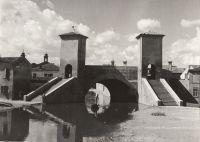
S-3103, Front view
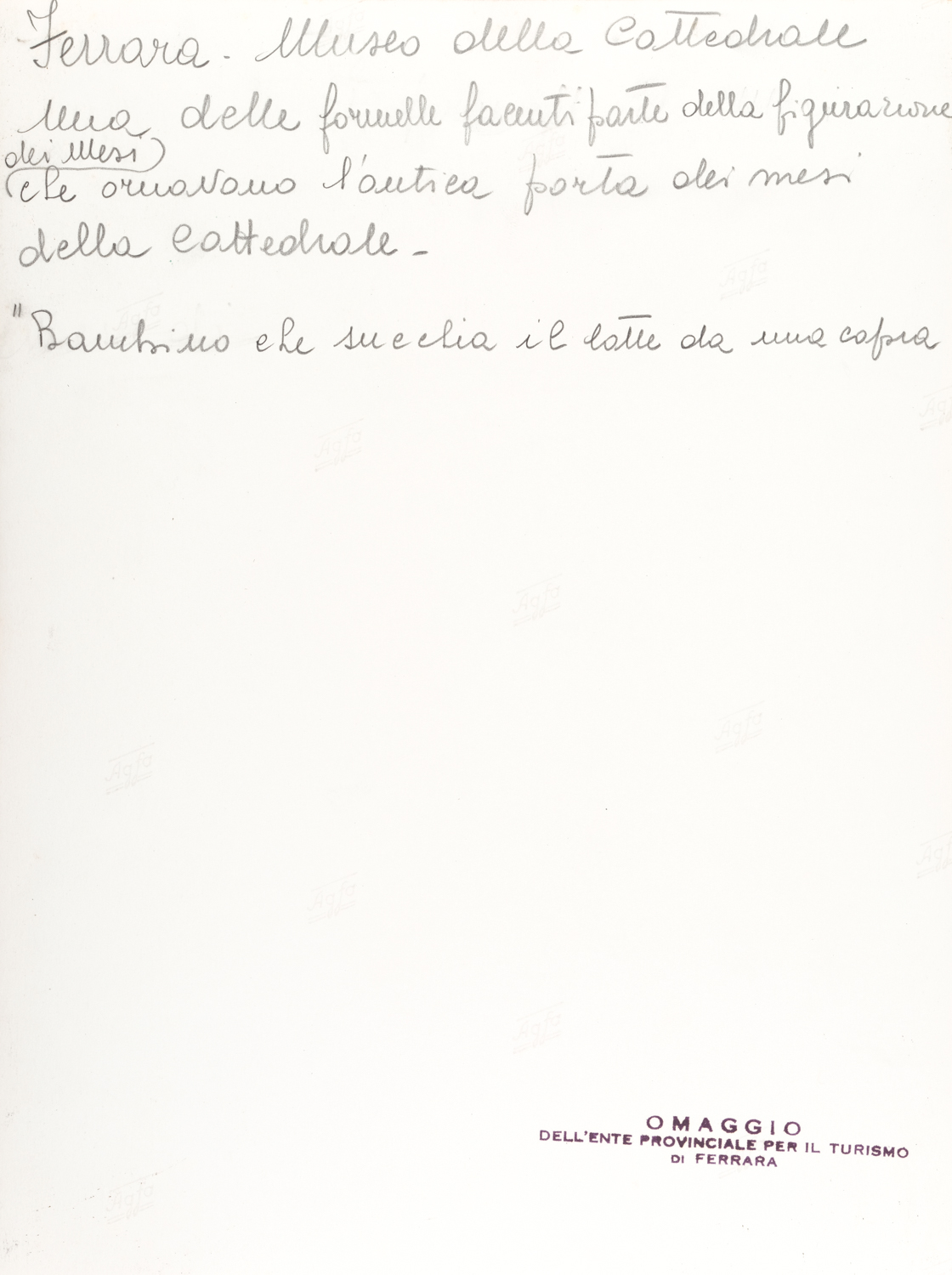
S-3103, view verso


![S-3111, Achille Villani & Figli, "Ravenna. [Sar]cofagi che [la] tradizione [at]tribuiva [a Galla Pla]cidia, mer[avi]glio[samen]te i[ll]uminati. La lune[tta mostra s]una gra[ticola e il] martir[e S. Lorenzo]", 1950s](/y/images/Hauptansichten/S_3111_full.jpg)

