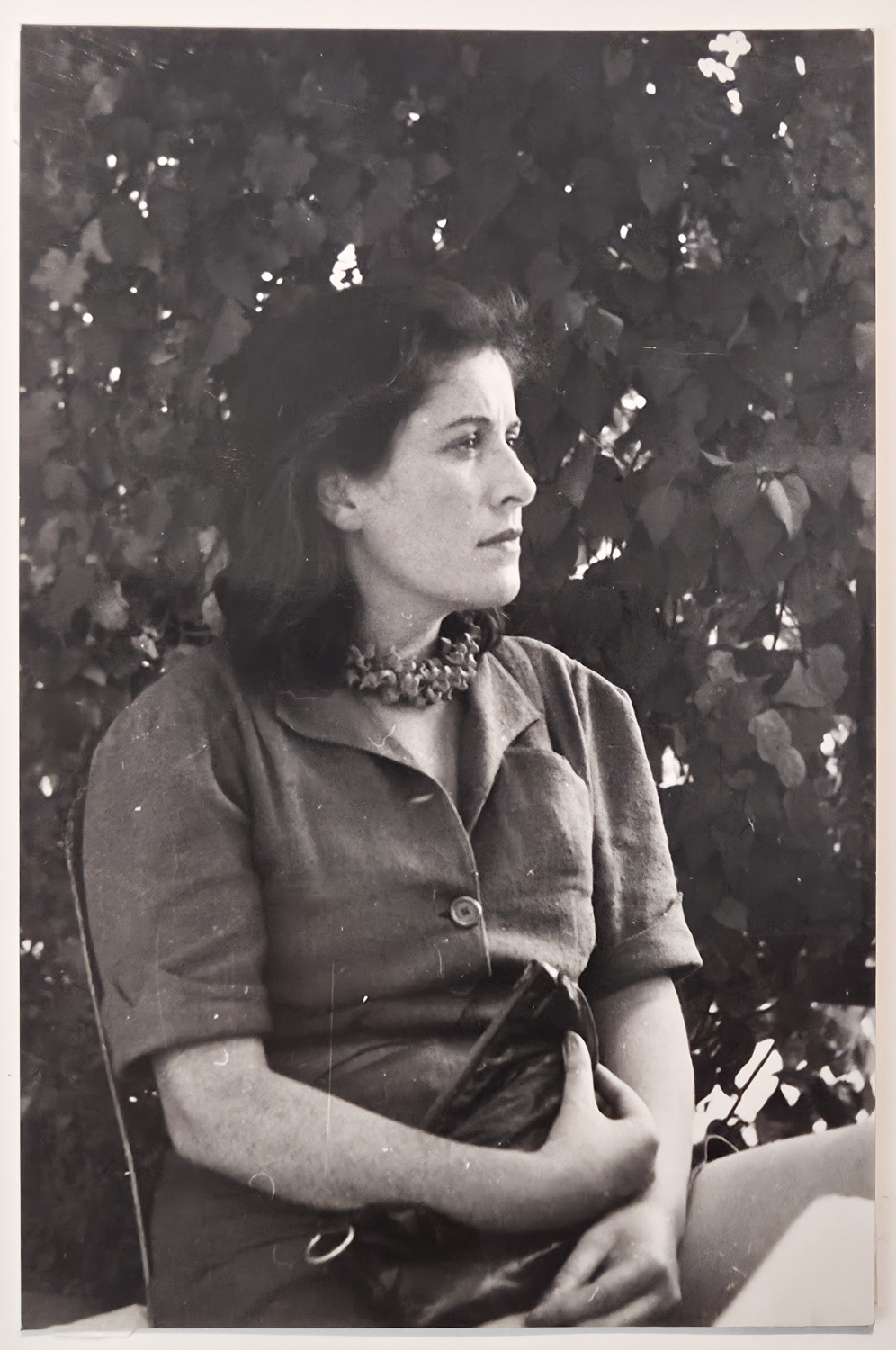
"Dora Maar"
Mougins (FR)
gelatin silver print
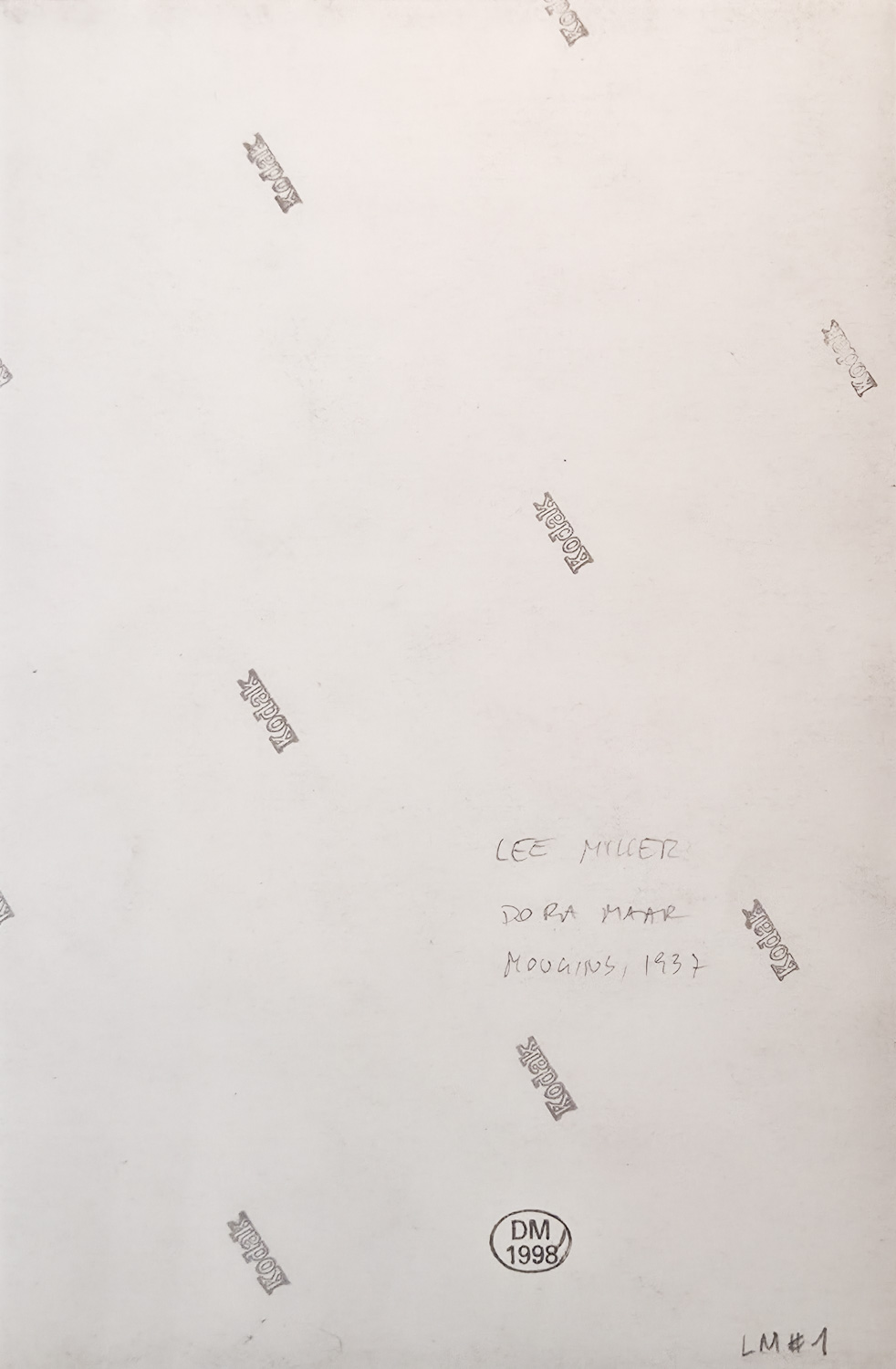
Dora Maar estate auction stamp verso
This simple portrait depicts the artist and photographer Dora Maar (1907–1997) and bears witness to her relationship with the photographer Lee Miller, a relationship marked by intimacy, mutual admiration, and intense periods spent together.
Lee Miller lived in Paris beginning in 1929 and was a student, model, and partner of Man Ray. Dora Maar (then still known by her birth name, Henriette Theodora Markovitch) also moved in this circle around Man Ray, André Breton, Georges Bataille, and Paul Éluard beginning in 1931. Through these shared photographic and Surrealist networks, their paths crossed for a brief time in Parisian studios and cafés. Miller parted ways with Man Ray and returned to her home country, New York, in 1932. After a brief marriage to an Egyptian businessman, Miller met the Surrealist artist Roland Penrose at a party during a trip to Paris in 1937; he would later become her second husband.
As early as the summer of 1936 and again in late summer 1937, the modest Hôtel Vaste Horizon in Mougins, in the south of France, became the center of the international Surrealist avant-garde. Pablo Picasso and his then-girlfriend Dora Maar had already taken up residence at the hotel. Lee Miller and Roland Penrose joined them from a Surrealist gathering in Cornwall, England, along with Max Ernst, Leonora Carrington, Paul and Nusch Éluard, Man Ray and his new lover Ady Fidelin, Eileen Agar, Joseph Bard, and E.L.T. Messens.1 Picasso had set up a studio in his bedroom and painted portraits of his friends every day. In this libertarian summer commune, the boundaries between life, love, and artistic experimentation blurred.2
In the midst of this creative peak, Lee Miller and Dora Maar meet again. Two of the most radical female photographers of the modern era. Miller, who—after achieving success as a U.S. fashion icon and darkroom pioneer—had freed herself from a stifling marriage in Paris, meets Maar, who, already a celebrated photographic artist, was creating socially critical photo essays and surreal photomontages. Both women shared the fate of having long been perceived by patriarchal art history solely as muses to their partners. Yet in Mougins, together with Nusch Éluard, Eileen Agar, and Ady Fidelin, they acted as completely independent, creative individuals.
The portrait that Lee Miller took of Dora Maar is a testament to this female alliance. The contrast with Picasso’s contemporaneous depictions of Maar could hardly be more dramatic: While Picasso immortalized her that same year primarily as a hysterical, broken, weeping woman (La femme qui pleure), Miller approaches her friend with deep empathy and respect. Through the female gaze—the emancipated, feminine perspective—the camera captures Maar in a moment of intellectual acuity, elegant composure, and unshakable self-assurance.
In a community where women like Miller, Maar, Agar, and Éluard portrayed and inspired one another, they undermined the traditional division of roles in the art world. Lee Miller claimed her camera as an instrument of her own agency. The portrait of Dora Maar is therefore far more than a casual vacation photo: it is a document of deep artistic complicity and a powerful manifesto of female self-empowerment on the eve of catastrophic upheavals in Europe.
(Christoph Fuchs)
Notes
1
Antony Penrose, “Roland Penrose and the Impulse of Provence” in: Claire Davison, Béatrice Laurent, Caroline Patey and Nathalie Vanfasse (ed.), Provence and the British Imagination, Milano 2013, p. 209
2
Cecile Paul, “Summering with the Surrealists: Sea, Sex and Sun”, Messy Nessy’s Cabinet 2022, www.messynessychic.com (accessed 5.8.2026)
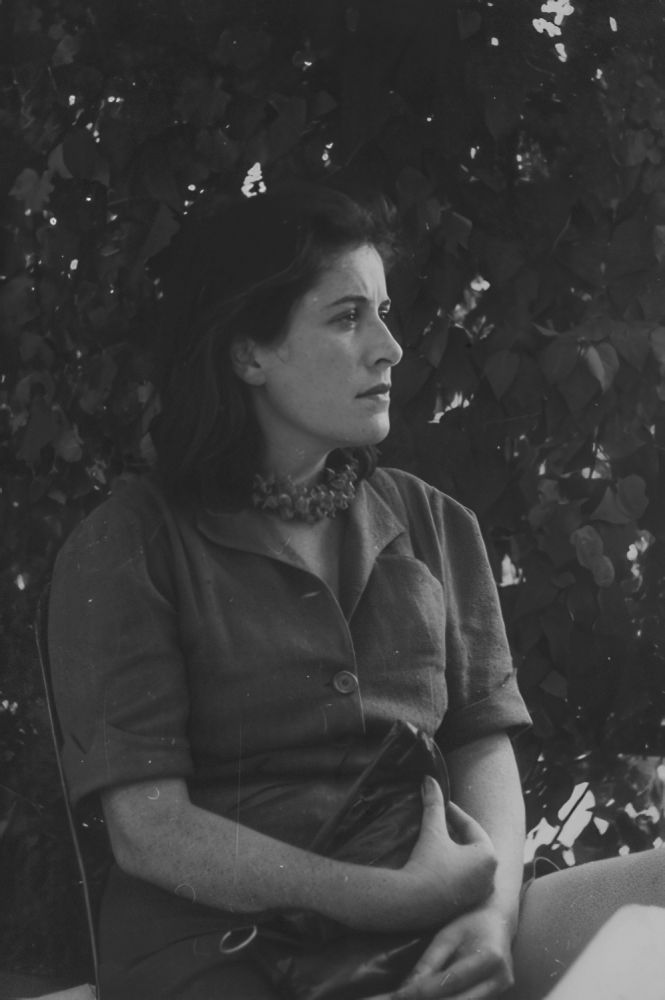
S-3118, Front view
© Lee Miller Archives
S-3118, view verso
S-3118