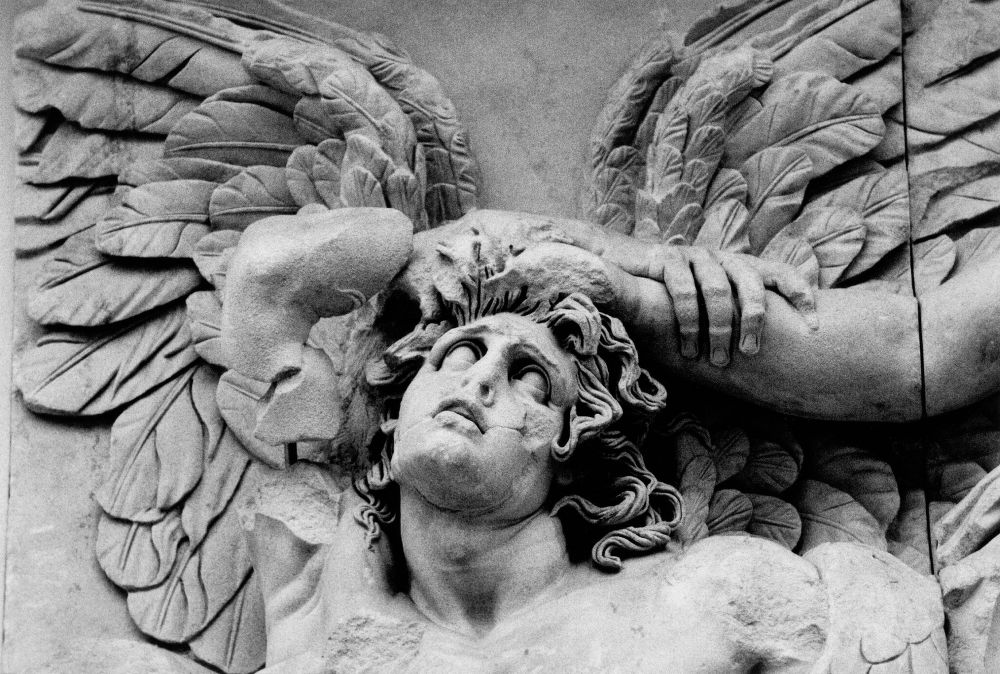
"Pergamonaltar, Alkyoneus, Detail"
2nd century BC, Pergamonmuseum Berlin
gelatin silver print, selenium toned
signed, dated, titled and numbered (pencil) on verso
At first glance, this seems to be a glimpse of an angel, when in fact it is the giant Alcyoneus. Due to the weathering the stone of the Pergamon Altar looks quite different as at its time of origin 2200 years ago. Moreover, grainy film material was used to give the picture a uniform structure and, besides the most carefully chosen detail, to create a certain, timeless form, loosened from the original context.
(Fritz Simak)
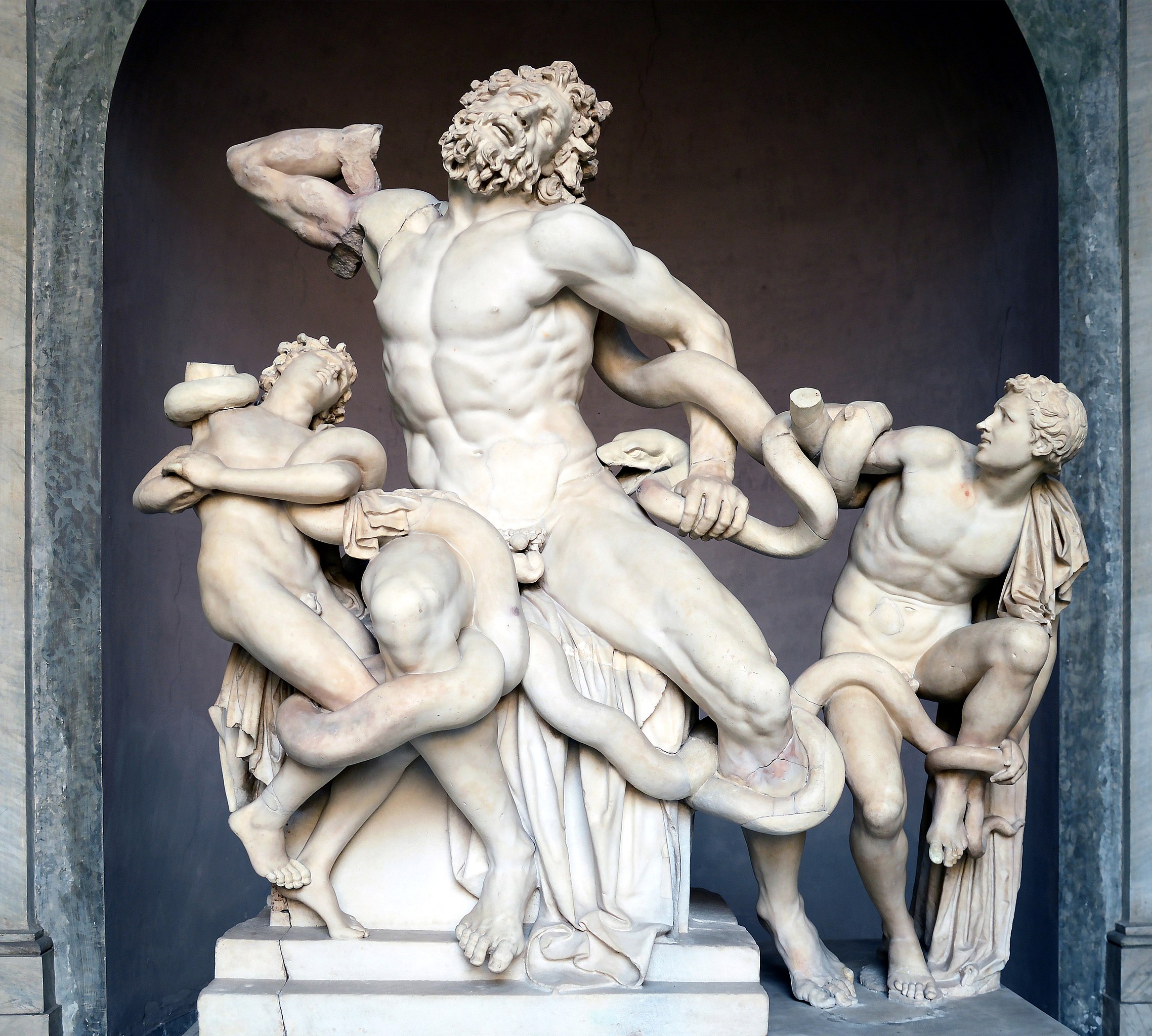
The Pergamon Altar is a monumental altar - more than 30 meters wide and deep - which was erected under King Eumenes II in the first half of the 2nd century BC on the castle hill of the city of Pergamon in Asia Minor. Its partial reconstruction with the original friezes is now in the Pergamon Museum in Berlin. It is one of the most important surviving works of art of Hellenism, if not of Greek antiquity as a whole. The pedestal was adorned with a high relief depicting the battle of the giants against the Greek gods. Almost all the important Olympian gods were gathered on the eastern side, which was the first to appear. It is striking that the gigantic opponent of the goddess Athena, Alkyoneus, is very similar to Laocoon in both posture and depiction.
Alkyoneus is named as the son of Gaia and the blood of Uranos, which falls on Gaia when he is emasculated.
In the library, Alkyoneus is immortal as long as he remains in the land of his birth. Consequently, Heracles' arrows in the Gigantomachy do not harm him until the latter drags him away from Pallene. He is wounded by Heracles with an arrow when he tries to storm the heavenly dwelling of the gods. The wound causes him to fall to earth, but through this contact with his mother Gaia, he gains new strength and takes up arms against the gods anew. Heracles' arrow strikes him again, but on Athena's advice he grabs him immediately after his renewed fall, pulls him out of his hometown and thus deprives him of the source of his strength, whereupon he dies.
(wikipedia, translated with deepL)
S-0355, Front view
© Fritz Simak / Bildrecht, Wien
S-0355, Laocoön and his sons, also known as the Laocoön Group. Marble, copy after an Hellenistic original from ca. 200 BC. Found in the Baths of Trajan, 1507.