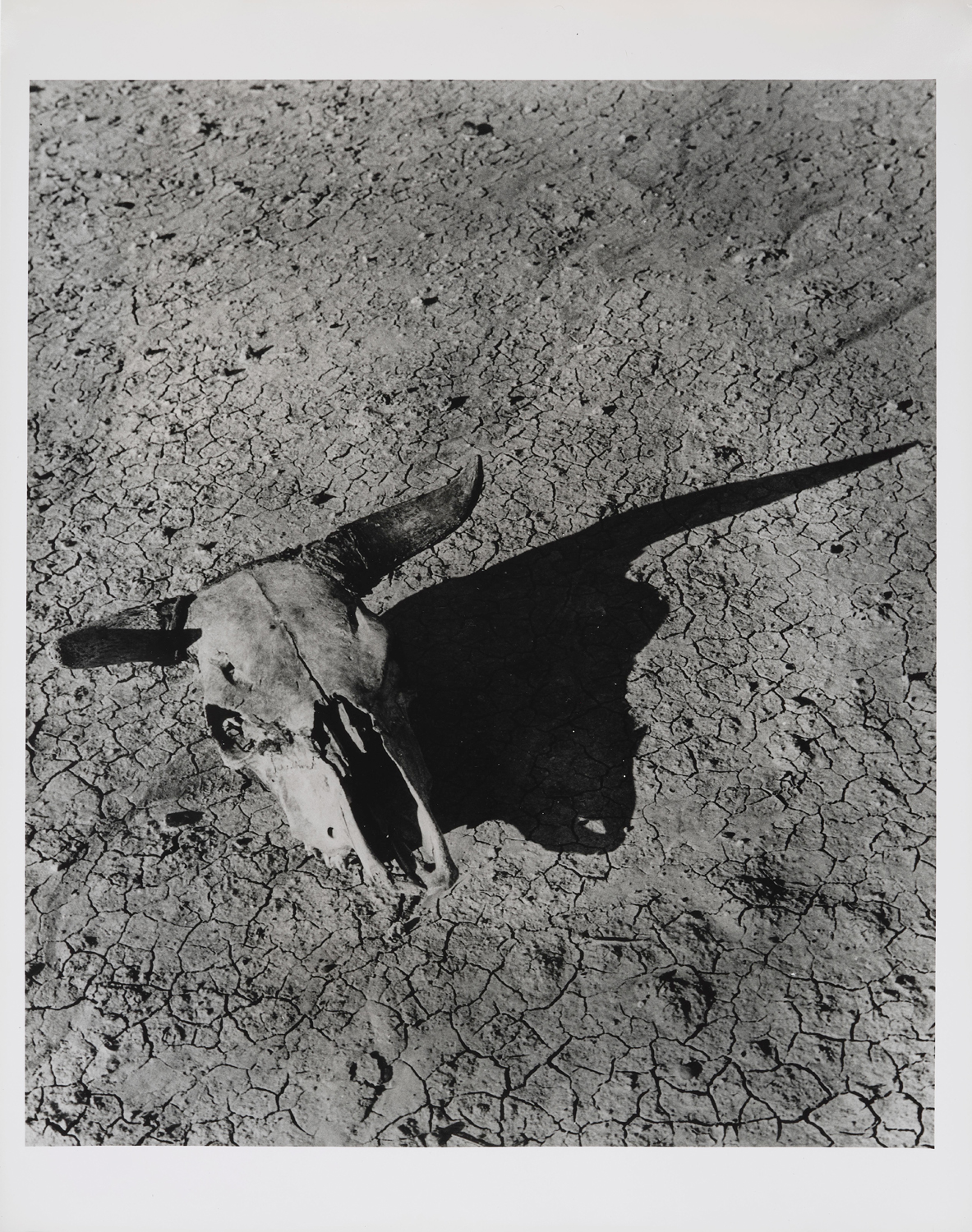
"Skull, Badlands, South Dakota"
often titled with "The bleached skull of a steer on the dry sun-baked earth of the South Dakota Badlands"
gelatin silver print
artist stamp, titled and dated (pencil) on verso
Arthur Rothstein showed an early interest in photography. While studying at Columbia University, he met economics instructor Roy Stryker, who would later establish the photographic section of the Resettlement Administration (later the Farm Security Administration, FSA) in Washington, DC. Appreciating Rothstein's technical proficiency and enthusiasm for photography, Stryker hired him in 1935 as the first staff photographer for the FSA.1
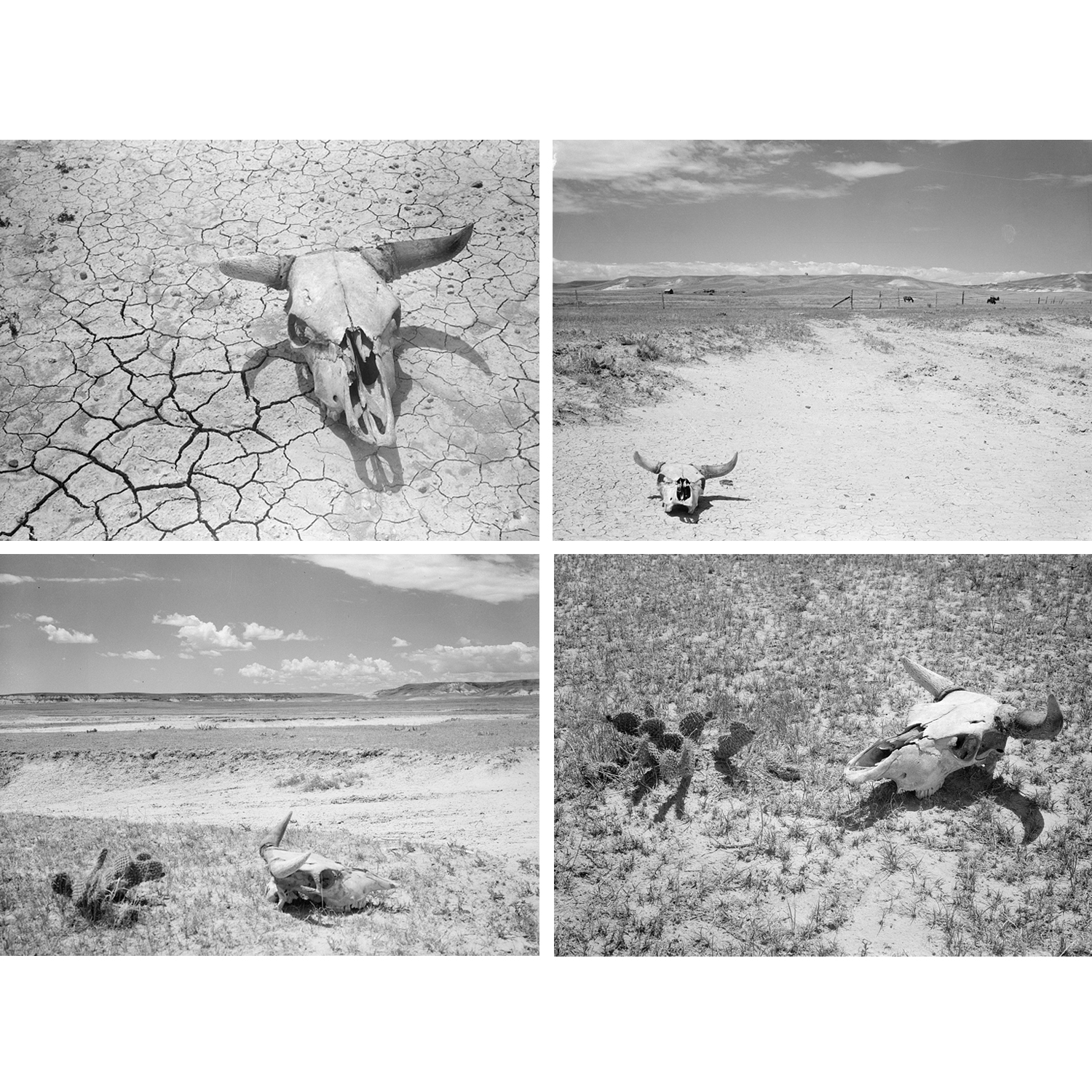
Arthur Rothstein’s skull photograph became the symbol of a major Depression-era controversy that still reverberates today. The picture was taken for the Farm Security Administration, a government agency charged with assisting the agricultural communities impoverished in the Dust Bowl2. The FSA photographers took thousands of photographs for distribution to national news publications, but they also made artistic and experimental pictures. Rothstein found this steer skull in South Dakota and became interested in the texture of the cracked earth against the bone, so he played with the skull in different lighting circumstances and surroundings before sending the film back to headquarters. An Associated Press picture editor extracted this image from the group, separating it from its experimental context and providing a caption that was not Rothstein’s. The widely-published photo, which had been taken in May when arroyos are frequently dry, became the icon of the increasingly severe drought which actually began a few months later. When it was discovered that there were five skull photographs, anti-Roosevelt political factions took advantage of Rothstein’s photographic intervention in an election year to foment fears about government deception. The skull was native, the drought was real, but the restaging threatened to dissolve faith in the entire operation of documentary photography. Documentary filmmaker Errol Morris’ 2011 book Believing is Seeing returned to Rothstein’s photograph to revive the debate about manipulation, reminding us that we still have not found a comfortable resolution regarding the relationships between photography, truth, and propaganda.3
(Christoph Fuchs)
Notes
1
Christopher Phillips and Vanessa Rocco (ed.), Modernist Photography: Selections from the Daniel Cowin Collection, New York/Göttingen 2005, p. 110
2
The Dust Bowl was a period of severe dust storms that greatly damaged the ecology and agriculture of the American and Canadian prairies during the 1930s. The phenomenon was caused by a combination of natural factors (severe drought) and human-made factors: a failure to apply dryland farming methods to prevent wind erosion, most notably the destruction of the natural topsoil by settlers in the region. The drought came in three waves: 1934, 1936, and 1939–1940, but some regions of the High Plains experienced drought conditions for as long as eight years. Wikipedia, https://en.wikipedia.org/wiki/Dust_Bowl
3
cf. MFAH The Museum of Fine Arts, Houston, https://emuseum.mfah.org/objects/90467/skull-badlands-south-dakota
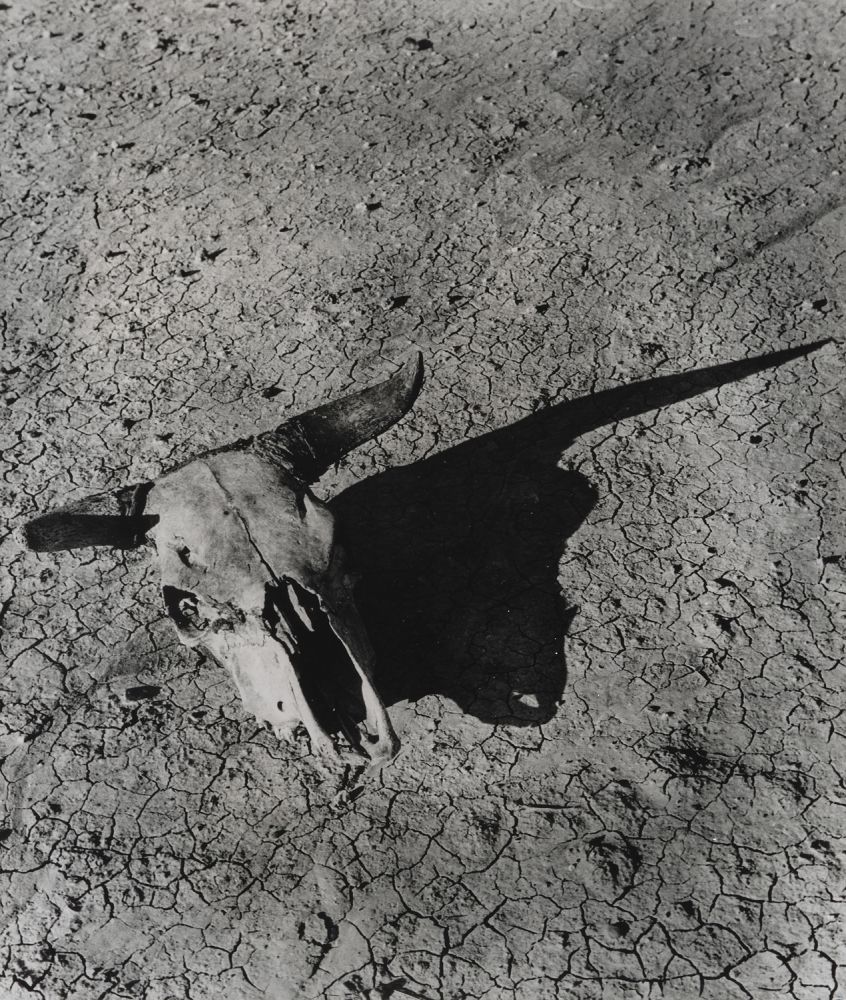
S-2945, Front view
S-2945, Arthur Rothstein, images with skull in Badlands, South Dakota, May 1936
S-2945