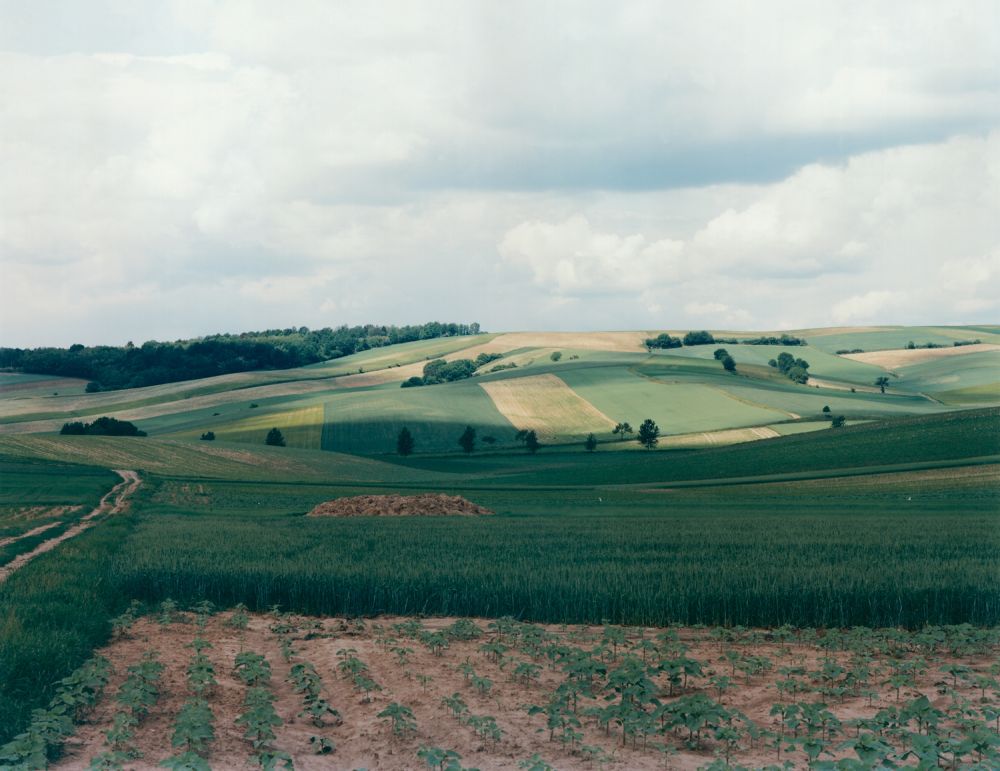
"Landschaft 16:34"
C-print (analogue)
signed, titled, dated and numbered (ink) on verso
Since childhood, I have made countless trips from Vienna to Niederleis, a small village about 30 kilometers north of the capital in the Weinviertel region of Lower Austria. I spent many days and weeks on my maternal grandmother’s farm, where I once again spend most of my time today. In the beginning, we traveled by steam locomotive, with the carriages connected by open platforms that allowed me to stand outside. This often resulted in me arriving covered in soot – occasionally I even witnessed fields being set alight by sparks from the train. Later, we traveled by diesel locomotive, and eventually by car on the B6 motorway.
For all these frequent journeys, the landscape never looked the same. It always made a different impression, especially when I had the opportunity to listen to music while traveling. The music I listened to, whether it was Miles Davis or Gustav Mahler, had a significant impact on my perception of the landscape.
I already had some landscape images in mind; it was just a matter of finding the right vantage point to bring them to life. That said, finding the perfect spot proved to be quite a challenge. I would often drive more than 100 kilometers a day on dirt roads and still not find anything suitable. It was also difficult to get a clear view without haze or dust in the air, which was a common problem. Visibility was usually best after a thunderstorm or heavy winds.
After a long search, I finally discovered the perfect landscape near Karnabrunn, just off the B6 motorway. Once I set up my 4×5-inch camera, things got even more interesting. The clouds didn’t just add drama to the sky – they also created a stunning play of light and shadow on the ground as they broke apart, giving me the perfect opportunity to enhance the contrast.
I had a narrow window of opportunity to quickly turn the film cartridge of the 4×5 inch camera and get a second shot. The weather was stormy, and clouds moved so fast that the light in the fields changed dramatically and constantly.
(Fritz Simak, from: Fritz, Simak, Photographs in the Key of Life, 2025, pp. 275-277)
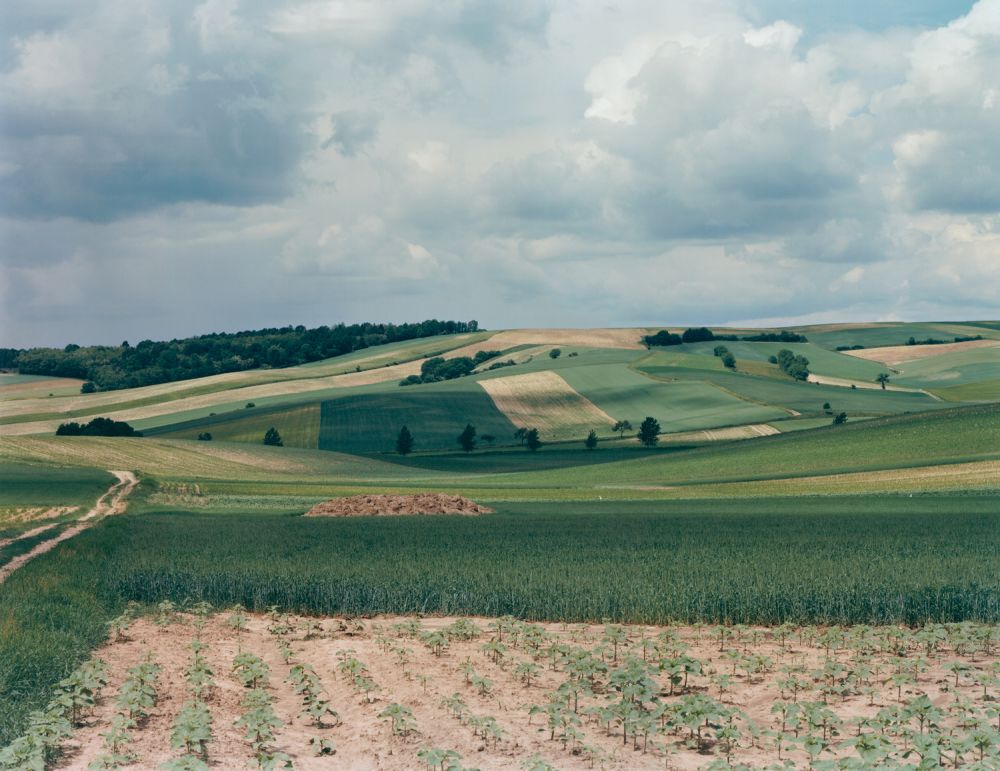
S-2915, Front view
© Fritz Simak / Bildrecht, Wien