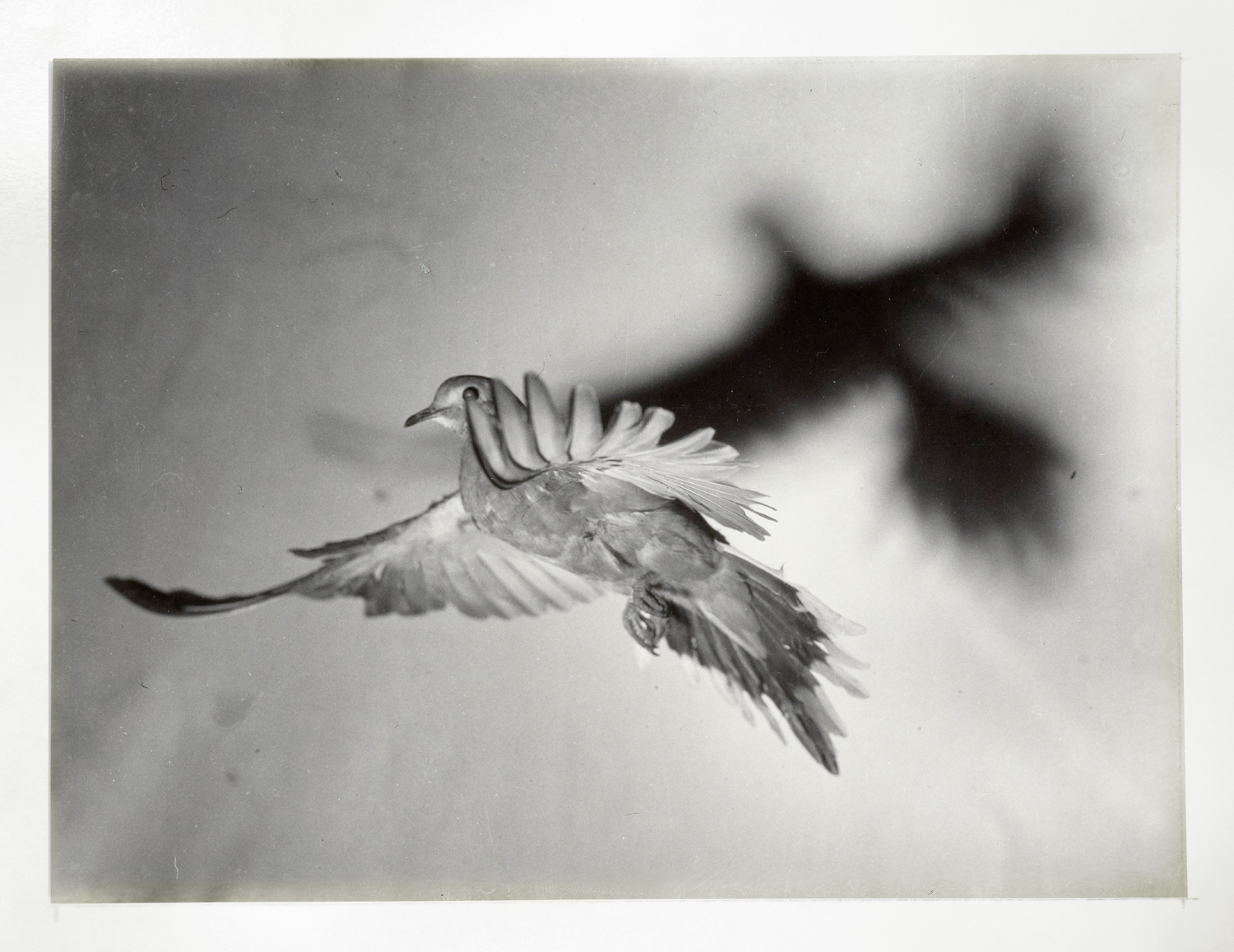
"Dove"
gelatin silver print
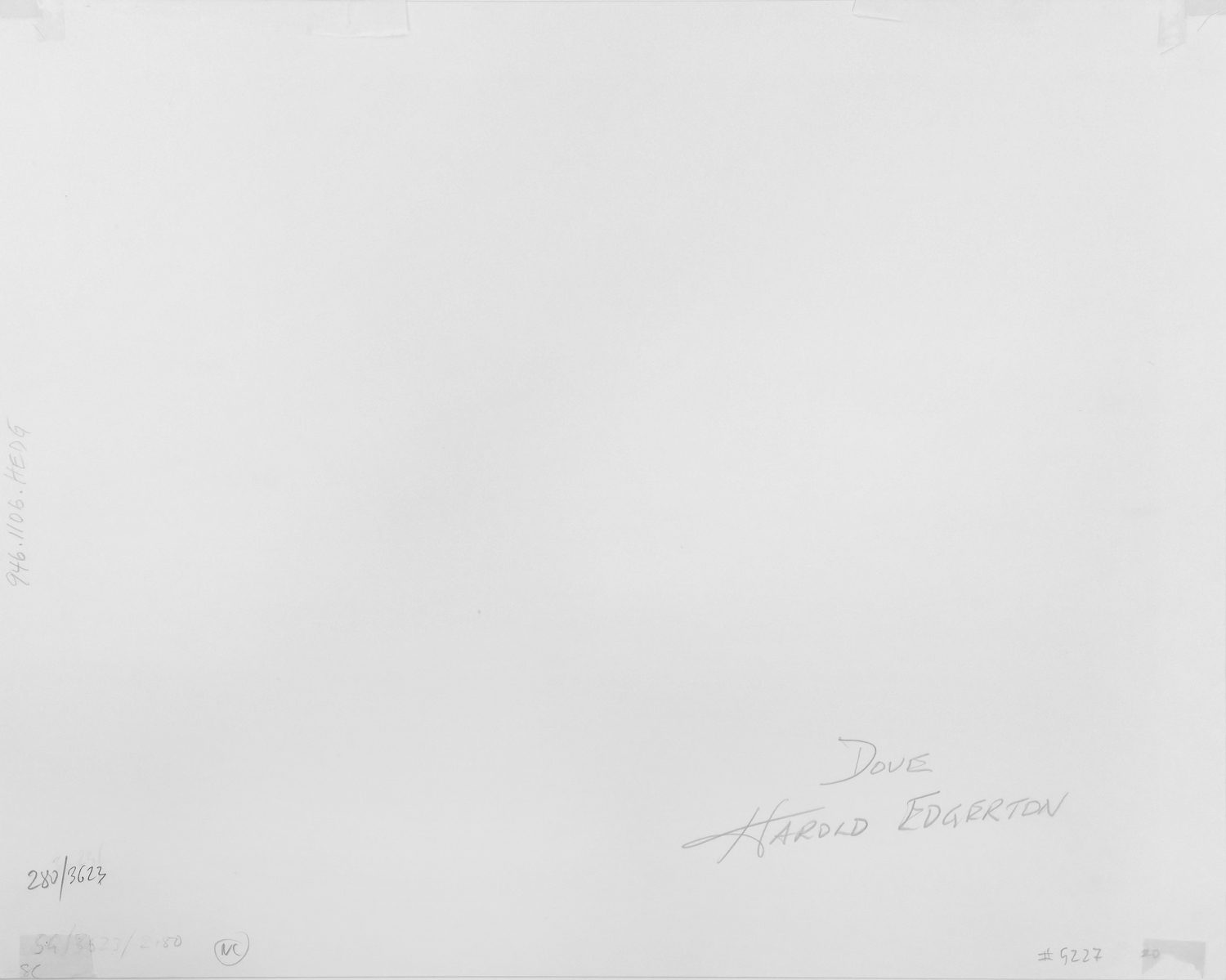
titled and signed (pencil) on verso
Harold "Doc" Edgerton is considered a pioneer of high-speed photography. With the stroboscopic technique he developed in 1931, he was able to generate extremely short flashes of light and thus freeze movements that are invisible to the human eye. The image of the flying bird impressively demonstrates this technical mastery.
Eadweard Muybridge had already been studying movement photographically in the 1870s. However, Edgerton's technical developments delved deeper into the processes and made previously invisible details visible. He synchronized his electronic stroboscope with a special high-speed camera so that exactly one film frame was exposed with each flash. While films were usually recorded and projected at 24 frames per second, Edgerton's cameras, capable of up to 15,000 frames per second, allowed movements to be slowed down considerably and invisible intermediate steps to be made visible.
In his laboratory at MIT in Cambridge, he documented projectile trajectories, falling drops, athletic movements, and the flight of birds in countless experiments. As soon as the pigeon was released, it spread its wings. Thanks to the precise synchronization of the stroboscope and camera, the wingbeat was captured in razor-sharp detail at every stage—the print shown here is an image from one such sequence. The shadow on the laboratory wall enhances the dramatic effect and at the same time refers to the experimental setting.
Edgerton's photographs were taken out of scientific curiosity and were initially used to analyze movement sequences. However, they soon found their way into exhibitions and publications, where they were perceived as an impressive combination of science and aesthetics. His images show the world in moments that would have remained invisible without his technical innovation – making the invisible permanently visible.
(Christoph Fuchs, translated with DeepL)
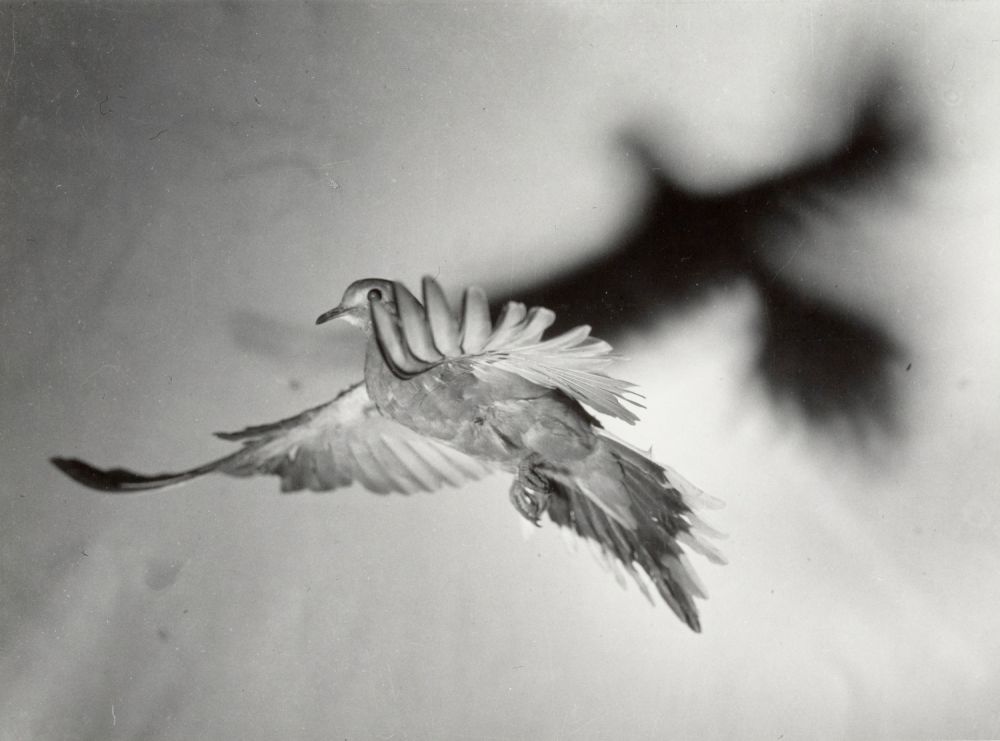
S-2907, Front view
© 2010 MIT, courtesy of MIT Museum
S-2907
S-2907, view verso