"Under the El, NYC"
gelatin silver print on baryta
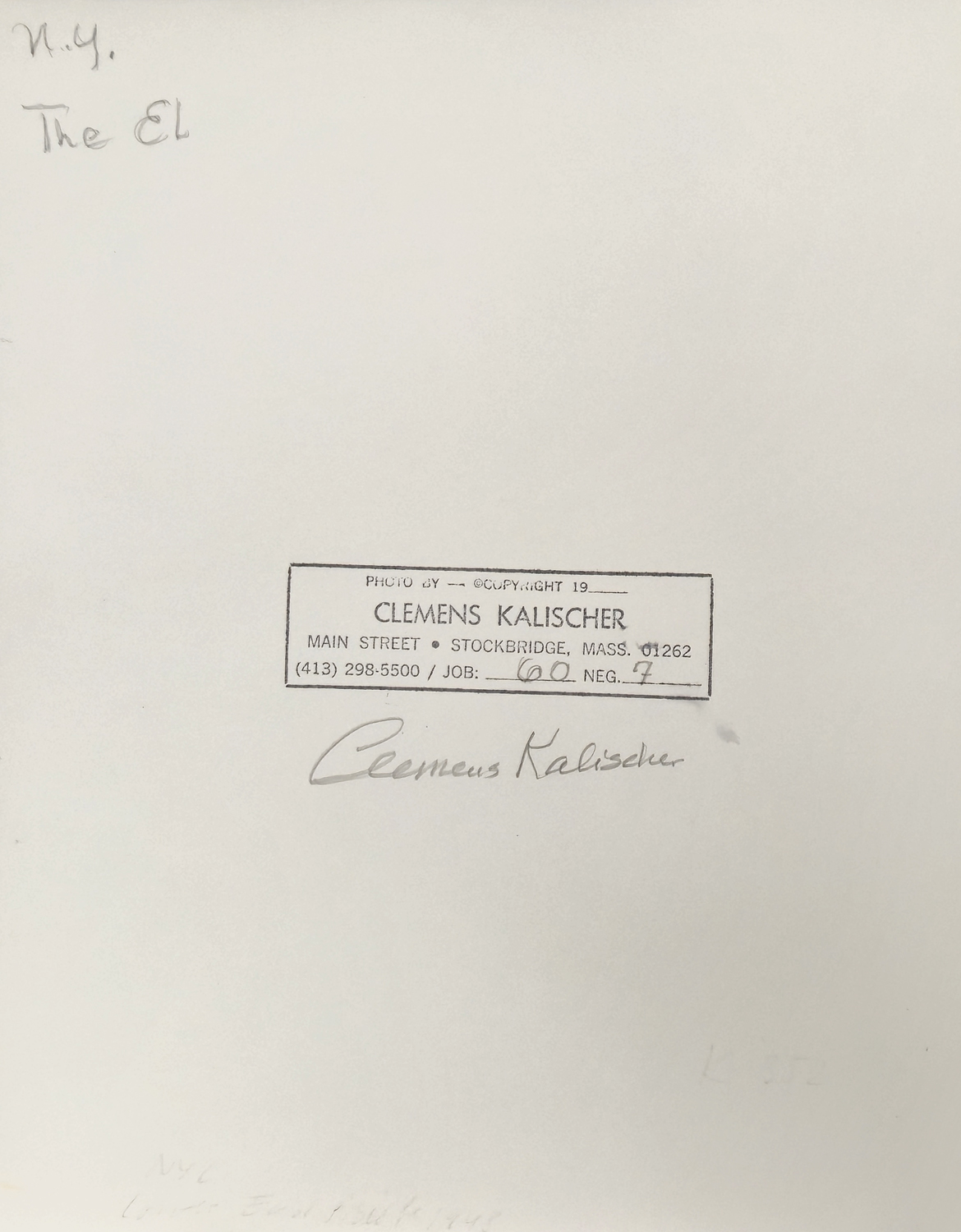
signed, titled, dated and artist stamp on verso
The photograph Under the El was probably taken in 1948 by the German-American photographer Clemens Kalischer. It shows a scene under New York's Elevated Railway, commonly known as the El. The photograph captivates with its strong contrasts of light and shadow, the spatial depth of the urban architecture, and above all the people acting within it. They appear small in relation to the enormous structures of the city, but nevertheless not lost. It is precisely in this balance between anonymity and individuality, between movement and observation, that the strength of Kalischer's photographic gaze lies.
Under the El is closely related to Kalischer's best-known photo series, Displaced Persons (DP), which he began working on in 1947. In it, he documented Jewish refugees who came to the United States after the Holocaust – mostly immediately after their arrival in New York or in reception camps. The faces, gestures, and postures of these people tell of exhaustion, hope, loss, and new beginnings. Kalischer, who himself emigrated from Germany in 1933, approached his subjects with great empathy. His camera became a silent witness to the transition: from the old to the new, from exile to an unknown future.
This image also reflects the theme of movement and the search for a place in the world. The people under the elevated railway, anonymous without their heads, could just as well be part of the group of “displaced persons” – refugees, immigrants, seekers. The city becomes an in-between space: a place of encounter and, at the same time, of testing.
Kalischer was less interested in the spectacular than in the human aspect of everyday life. Under the El bears impressive witness to this and reminds us that behind every anonymous big-city scene there are individual destinies.
(Christoph Fuchs, 2025 translated by deepL)
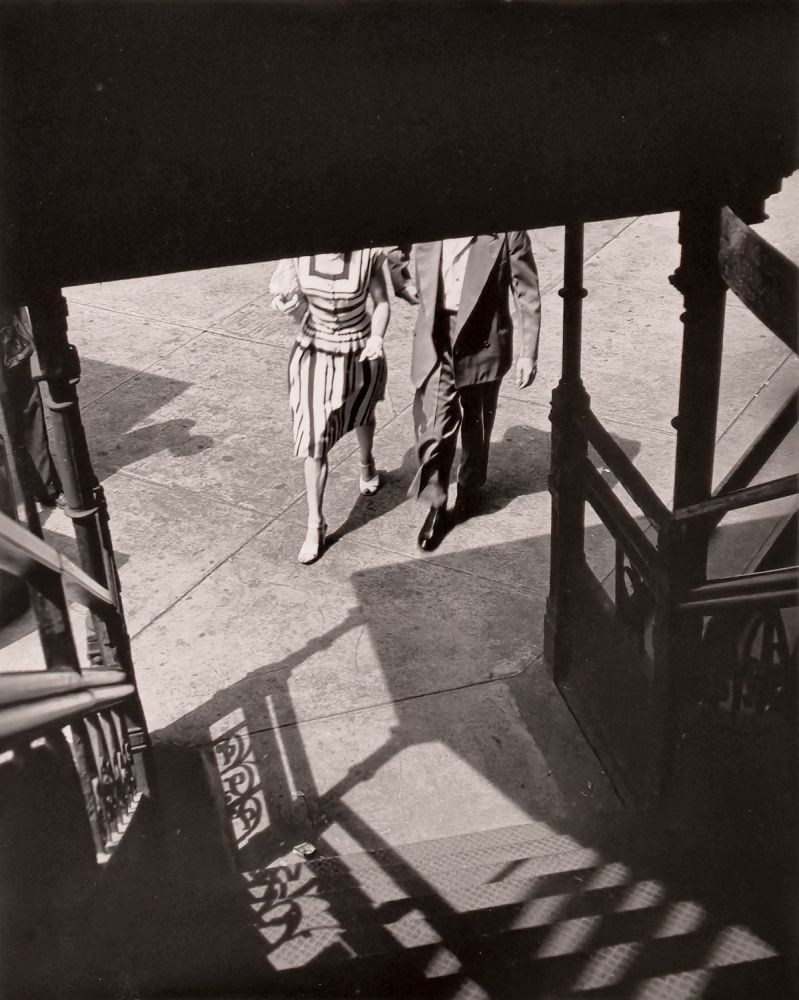
S-2894, Front view
© Clemens Kalischer Estate
S-2894, view verso
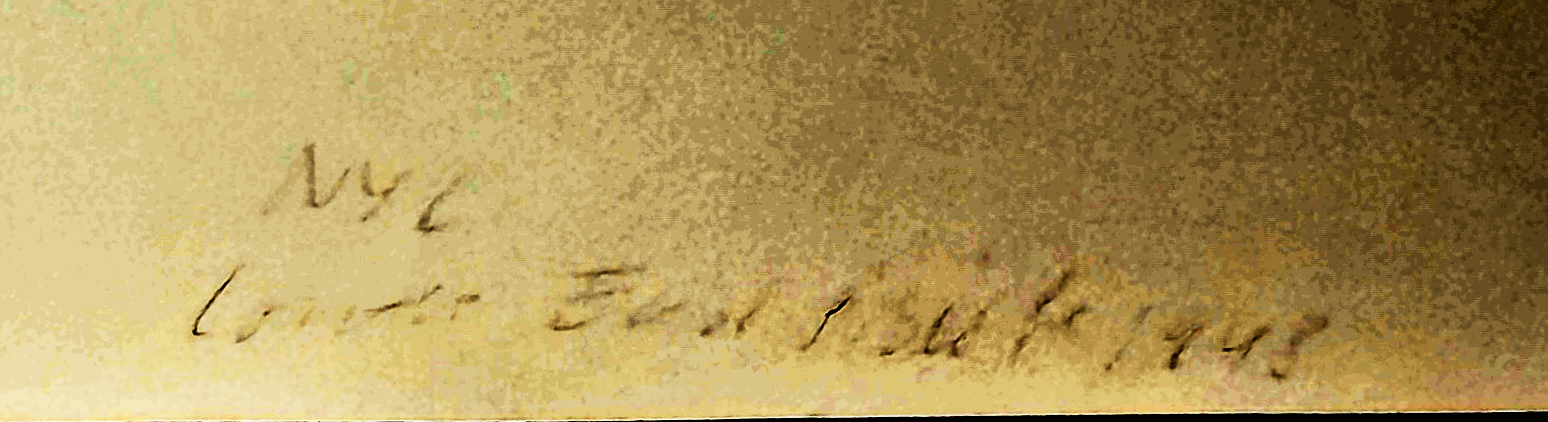
S-2894, title (NYC Lower East Side) and date (1948) in pencil, illegible