untitled
gelatin silver print
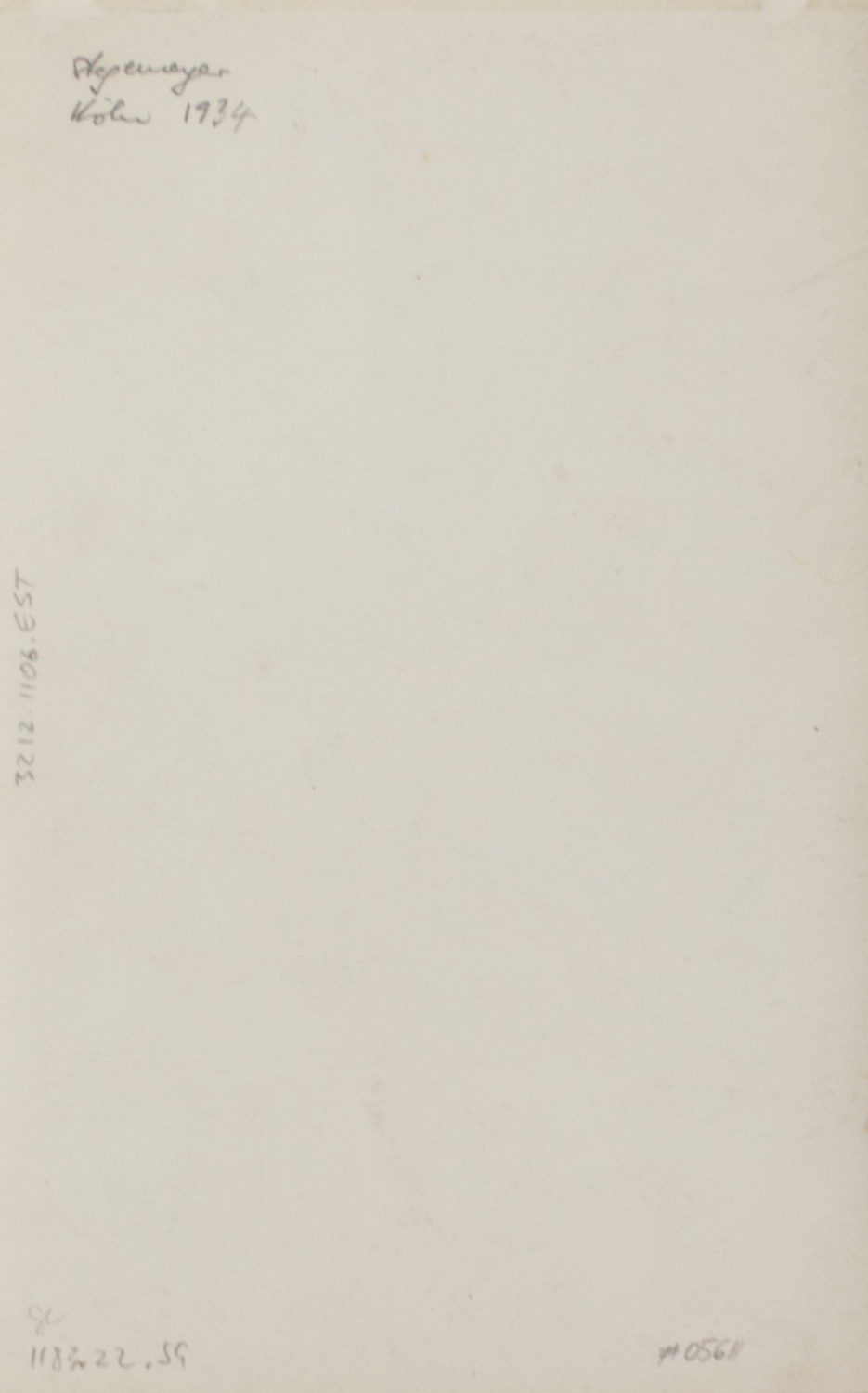
signed and dated (pencil) on verso
During the period of suppression and persecution of the artistic avant-garde, Elde Steeg, whose civil name was Elfriede Stegemeyer, developed - contrary to the official aesthetics propagated by the National Socialists - an open, experimental approach to the medium of photography that allowed her to assume a special role in the history of German photography in the 1930s.
Elde Steeg's beginnings in photography and her development of an independent photographic œuvre were largely self-taught. Coming from an upper middle-class family, she studied at the State Art School in Berlin and from 1932 at the Cologne Werkschule für Fotografie. She became a member of the Cologne resistance group the Red Fighters. During this period, Steeg experimented intensively with photography and, following the photo avant-garde of the Weimar Republic, she explored the limits and possibilities of the medium. The starting point of her work is above all the object world of everyday things, which she uses as models for photograms, photomontages, multiple exposures, etc.. Above all, glass objects and especially drinking glasses serve her as material for studies intended for her (unpublished) book The School of Seeing. She arranges things in unusual perspectives, dynamic arrangements and with the effective use of light and shadow. (Ferdinand Brueggemann, Galerie Priska Pasquer, Cologne)
In 1943, her flat was destroyed in a bombing raid, during which she lost most of the work she had created up to that point, making this work a special relic.

S-2382, Front view
© Nachlass Elde Steeg
S-2382, view verso