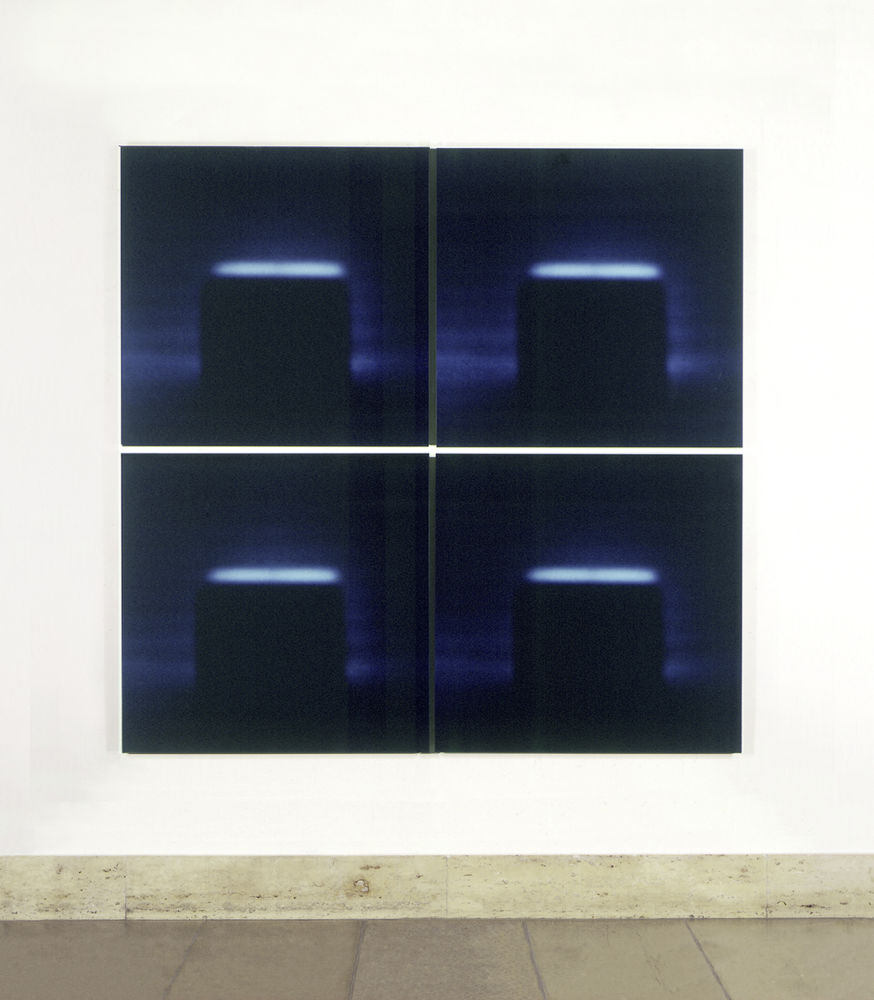
"cold boxes"
c-print on diasec on MDF board
Titled, signed, dated and numbered on mount verso
With the thermographic works the camera doesn’t record lightwaves, but instead differences in heat. Sensors capture these heat differences and transform them, digitally, into images. The structure of a room dissolves because of the diffused nature of heat waves. Many of the objects depicted were not actually present at the moment of capture; the images convey the presence of absence. The left over traces of heat are captured 3-15 minutes after the removal of the object. The result of time and heat waves allows to work within a larger time frame? This way of taking thermographic images results in the visualization of the invisible.
With my work I am trying to touch zones of unknown memories in the imagination of the viewer. In this respect, the pictures are created by the viewer. They know the pictures from memory and sharpen them themselves.
We see what we feel.
(Stephan Reusse)
Man has invented a series of devices with which he registers phenomena that elude his senses. The inaudible becomes audible, the invisible becomes visible. The principle of all these devices is the translation of phenomena into the reception areas of our sense organs. It is not a fundamental problem to process information from one reception area for another area. The basis for this is the realisation that the entire world is nothing but energy that constantly changes its forms of appearance. This brings us to the big bang and not far from Reusse's "thermovision".
Reusse uses a device that can register heat and that is far more sensitive than the human sense of touch, which lets us feel temperatures. The trick is that the heat radiation is converted into optimal optical signals. The device helps us to see what we cannot feel.
Heat has a tendency to dissipate, i.e. to equalise. A warm body becomes a heat source in a cold environment. The heat radiates in all directions and envelops the body like an aura. If you translate this heat radiation into something visible, it takes the form of a cloud, a three-dimensional veil that remains for a short time even when the heat source has already moved away. We see what we have not felt. Reusse's works on "thermovision" are reminiscent of photos of the northern lights, a phenomenon that we explain rationally and encounter emotionally. We succumb to the magic of an apparition beyond our experience.
(Wolfgang Hahn)
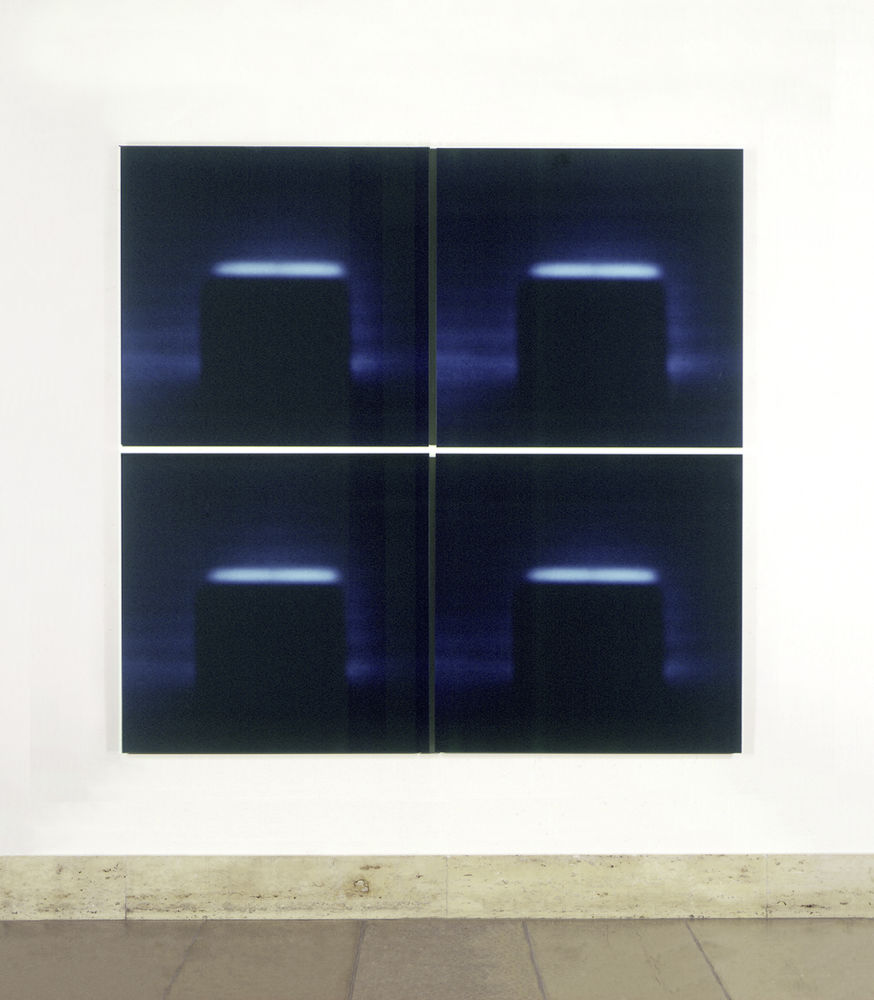
S-1150, Front view
© Stephan Reusse / Bildrecht Wien